
Cricket betting in New Zealand: the markets, the margin, the monopoly
 Available in US
The cricket betting world in New Zealand looks, on the surface, like any other sport: a list of fixtures, a list of prices, a bet slip at the bottom of the screen. The shape underneath is unlike anywhere else a New Zealand punter might compare it to. From 28 June 2025, TAB NZ is the only operator that may lawfully offer sports and racing betting to a person in New Zealand, and Betcha is its sister brand — the same operator group, not a rival. There is no bookmaker licence to apply for and no register of approved brands. Other betting sites New Zealand readers meet online exist in a different legal place entirely: named by name, not licensed here, and outside any New Zealand complaints route.

This page works through what that means in practice. The fundamentals of a cricket match and how an odds board is built, the live markets and in-play mechanics, the bet types and how a stake becomes a return, the tournaments that drive the calendar, and the operators a New Zealand reader is most likely to compare. The angle is consequence — what follows from this structure when a punter actually places a bet.
Snapshot: data current as of 27 October 2026, licence and monopoly status verified against the Department of Internal Affairs and the Racing Industry Act 2020 as amended in 2025. Operator market coverage and tool availability verified against each operator’s own terms on the same date.
Table of Contents
- Live cricket markets and how a price moves mid-innings
- Cricket betting tips, prediction markets and what a “tip” really pays
- Bet types, odds formats and how a stake becomes a return
- The cricket calendar: formats, tournaments and where the volume sits
- The New Zealand betting landscape: ten operators, one lawful pair
- How a cricket betting market is built, and what the margin really takes
- How the New Zealand law actually works
- Responsible gambling in the New Zealand cricket market
- Crypto, anonymity and what the New Zealand regime does not allow
- Mobile and the TAB NZ app
- The cricket question every punter ends with
- Frequently asked questions
Live cricket markets and how a price moves mid-innings
A Test match can run five days; an ODI fifty overs each side; a T20 roughly three hours from first ball to last. Live cricket betting sits inside those windows, and the price board updates with every over. The mechanism is straightforward: a market is opened with a price for each outcome, and as runs, wickets and overs change, the book adjusts the numbers. A wicket in the third over of a powerplay shifts the price more than a single in the fifteenth over of an ODI, because the resource (wickets in hand, overs remaining) has changed more. That is what live markets react to.

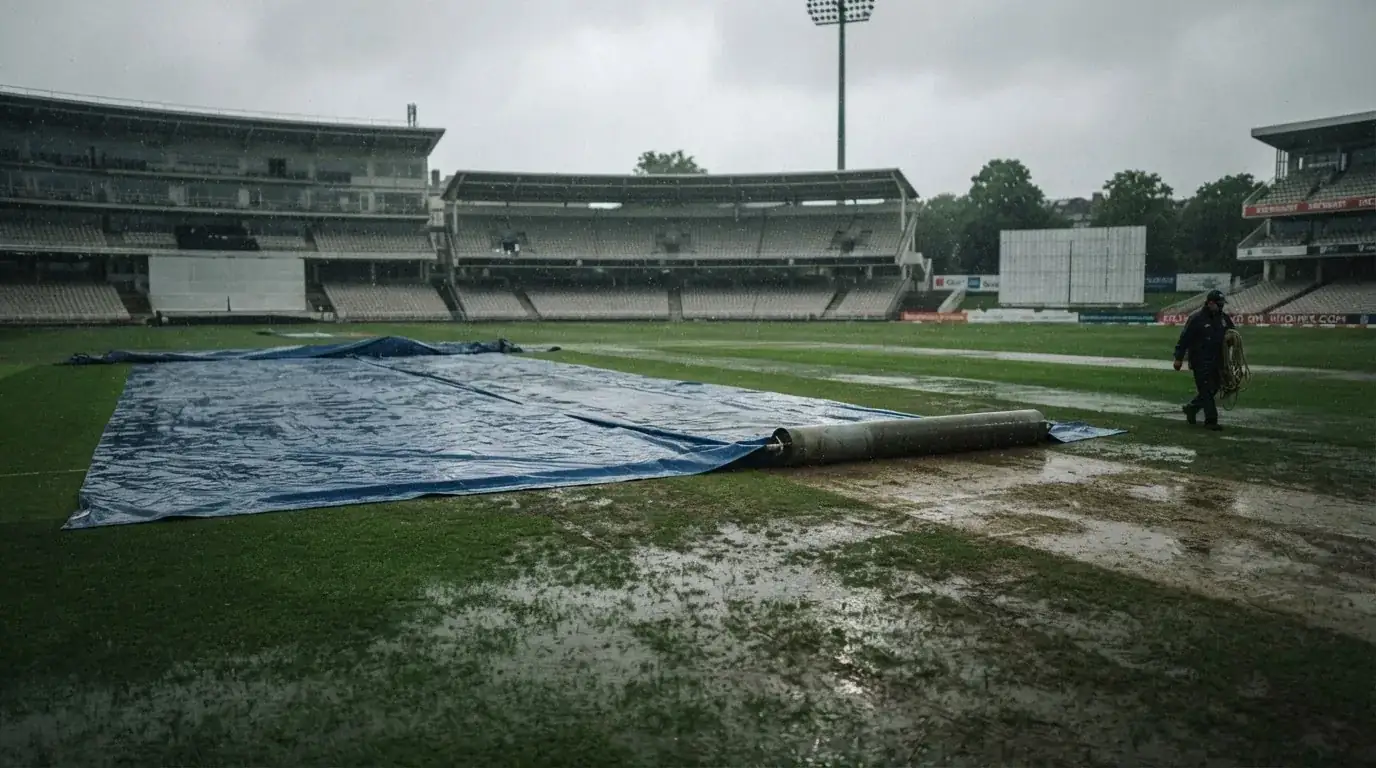
The mechanics that matter to a punter are settled before the match starts. The rules under which the bet is live — minimum price for a live bet, whether the market suspends while a bowler is changed, what happens to an unsettled bet if the match is interrupted by rain — are set in the operator’s house rules. In a Test, a market can stay live across a session break; in an ODI shortened by rain, settled bets stand and unsettled ones are returned or recalculated under the Duckworth-Lewis-Stern method. A punter who has not read the rule before the over starts reads it after, when the position is already on the bet slip.
The shape of an in-play cricket market is narrower than the pre-game one. Pre-match, a TAB NZ fixture for an international carries match winner, top batsman, top bowler, total runs, partnerships, method of next dismissal and a long list of player props. Live, the same match tends to carry the next-over line, the next-wicket method, the next batter’s runs and the outright winner. Markets get thinner as the match goes on because the variables narrow. A Test at lunch on day three has fewer live markets than it did at the toss; a T20 in the fifteenth over has fewer still.
Cash out is the second live mechanic. It lets a punter settle a bet before the outcome is known — locking in a return that is smaller than the maximum possible, but turning the bet from open to closed. The price offered is the bookmaker’s view of what the bet is worth right now, not what it pays out if held to settlement. A bet that was placed at 2.50 and is now cashed out at 1.80 has been traded at a price the book is willing to stand behind. The number moves with the match. A punter who wants to know whether to cash out reads the cash-out price against the live odds for the same outcome: if the cash-out is worse than the live odds, holding makes sense; if it is better, the book is offering more than the market permits the bet to settle at.
The relationship between live odds and cash-out price is what the in-play section is really about. Both are derived from the same underlying view of the match; both move when the match moves. The difference is that one is a price for a new bet, the other is a price for an existing bet. A punter who treats them as the same number will close bets at the wrong time.
Cricket betting tips, prediction markets and what a “tip” really pays
A search for “cricket betting tips” returns a great deal, and most of it is advertising. The honest framing is this: a tip is a forecast, a forecast is a probability expressed as a view, and a view is worth exactly what the market says it is worth once the bet is placed. Nothing in the tip moves the price — only new information does, and the book has the same information faster.
That is not a counsel of despair. It is a way of placing the tip in the right spot in the punter’s process. A tip’s job is to point at a market the punter has not looked at; the punter’s job is to price that market and decide whether the tip’s view matches the odds. A tip that says “India to win the toss” at 1.90 is not useful if the same bet can be placed at 1.85 elsewhere — the tip has pointed at a market that exists, but the price is wrong for the view. A tip that says “the openers will both reach twenty” at 2.40 against an odds board that has them at 2.10 is closer to useful, but only because the discrepancy exists at the moment the tip was written. By the time the punter reads it, the market may have moved.
The structure of a tipster market in New Zealand reflects the structure of the betting market: TAB NZ publishes its own form and tips through Trackside and the racing-form section, and a range of offshore sites publish cricket tips that ship with affiliate links to bookmakers not licensed in New Zealand. A punter who follows the second kind is, by the structure set out in the regulation section below, following a tip from a source that may not lawfully serve the bet being placed. The tip may be accurate; the placement may not be lawful.
Prediction markets are a different mechanism. A prediction market is a venue where the price of an outcome is set by participants betting on it, and the closing price is read as the crowd’s probability. Some offshore brands now run “Prediction Markets” sections (Golden Panda’s site lists one alongside its sportsbook and casino). The pricing of those markets is a crowd view, not a bookmaker’s margin. A punter comparing a bookmaker’s odds against a prediction market’s price is doing the same job as a punter comparing two bookmakers — looking for the spread. The result of that comparison is sometimes favourable, and sometimes not; the mechanism is the same.
The bankroll question is the question underneath all of this. A tip is a forecast; a forecast is worth what the market says it is worth once the bet is placed; the bankroll is what makes the next bet possible after this one loses. Tips that promise a system that wins are selling a probability of one, and a probability of one does not exist. A punter who reads tips as a way to find a price the market has mispriced is closer to the truth than one who reads them as a way to find an outcome that will happen.
Bet types, odds formats and how a stake becomes a return
The odds a punter sees on a cricket board are decimal odds by default in New Zealand — the form $2.10 means a $10 stake returns $21 (a $10 profit on top of the $10 stake). Fractional odds exist in some markets and overseas books, but the arithmetic is the same underneath: a return is stake multiplied by odds, and a net profit is stake multiplied by odds minus one. A $10 bet at 2.50 returns $25 — $10 of stake returned and $15 of profit. A $10 bet at 1.50 returns $15 — $10 stake and $5 profit.
The two-outcome market is the simplest cricket market to read. A match winner with two teams and no draw is the most common: India to win at 1.90, New Zealand to win at 1.90. Each outcome pays almost double the stake. The bookmaker keeps a margin built into both prices, and the margin is what the section below works through in plain arithmetic. For a market with three outcomes — India to win, New Zealand to win, draw — the same mechanic applies across three prices, and the margin is shared across all three.
Combination bets multiply the odds of each leg into one price. A double on India to win at 1.90 and the total runs to be over 300 at 1.80 pays 1.90 × 1.80 = 3.42. A treble multiplies three. A Same Game Multi combines legs from one match; a regular multi combines legs from different matches. The risk is that every leg must win. A four-leg multi at average odds of 1.80 has a combined price of about 10.5 — a $10 stake returns $105 if all four land, but each leg must win individually. The bookmaker’s margin compounds across the legs, so a multi is a higher-margin product than a single.
Handicap lines and over/under totals are the second family of cricket markets. A line of India -1.5 means India must win by two wickets or more for the bet to pay; a line of total runs over 300 means the combined innings total must clear 300. The book sets the line so that both sides of it sit close to even money, and the margin is in the spread between the two prices. A line of 300 with over at 1.90 and under at 1.90 has the same margin as a match winner with both sides at 1.90 — the formula is independent of the market’s shape.
Top batsman, top bowler, method of dismissal and player props are the third family. Each carries its own margin, set by the bookmaker. Player-prop markets in international cricket tend to carry higher margins than match-winner markets because the book has less data on individual performance than on team performance. A punter who reads the margin across market families before placing the bet sees a different picture than one who reads only the headline odds.
The payout share of a market is the share of every dollar bet that the market returns to punters in winnings. A perfect market — one with no margin — returns every dollar. A market with a 5% margin keeps five cents of every dollar bet and returns ninety-five cents. The calculation is straightforward: for a two-outcome market with prices p₁ and p₂, the payout share is 1 ÷ (1/p₁ + 1/p₂) and the margin is 1 minus that. The section below works through an illustrative case.
The cricket calendar: formats, tournaments and where the volume sits
A cricket side has eleven players, and the international game has three formats. Test cricket lasts up to five days with a maximum of four innings (two per side) and a minimum of ninety overs scheduled per day; a Test that neither side wins is a draw. One Day Internationals (ODIs) are fifty overs per side; a tied ODI happens when the chasing side is bowled out or runs out of overs at the same score as the first innings. Twenty20 (T20) is twenty overs per side (120 legal deliveries), a bowler may bowl at most four overs, and a tied T20 is decided by a super over.
The three formats produce different markets. Tests are long enough that in-play betting stretches across sessions; ODIs and T20s compress everything into a day. Player-prop markets are deepest in T20 because the format is short, the data is dense and the variables are narrow. Match-winner markets are deepest in Tests because the draw is a third outcome that has to be priced into the board.
The international governing body is the International Cricket Council (ICC). Twelve nations hold full membership and Test status; the World Test Championship has run since its inaugural season in 2019. The ODI and T20 World Cups sit on a four-year cycle and are the events that move the calendar most — the 2026 ICC Men’s T20 World Cup ran from 7 February to 8 March 2026 across India and Sri Lanka, with twenty teams in the field; India beat New Zealand by 96 runs in the final. Bilateral series between full members run throughout the year and are the everyday diet of the cricket market. Domestic leagues — the Indian Premier League, the Big Bash League in Australia, the Hundred in England — add their own windows and pull a global audience.
The rule that bites a settled bet is the Duckworth-Lewis-Stern method. Rain-affected ODIs are the canonical case: when overs are lost, DLS recalculates the target so that the chasing side’s required run rate reflects the resources (overs and wickets) it actually has. If too few overs are bowled (usually fewer than twenty), the match is a no result and most bets are returned. A punter who has a position on a rain-threatened ODI has a position on the weather as much as on the cricket. The same applies, in a different form, to T20s where rain can shorten an innings below the five-over mark required for a result.
The domestic calendar in New Zealand sits underneath the international one. The Black Caps play Test, ODI and T20 internationals through the southern summer; domestic first-class cricket runs through the same window with the Plunket Shield and the Ford Trophy; the Super Smash is New Zealand’s domestic T20. TAB NZ’s cricket market reflects that calendar — international matches and the major domestic games are listed, the smaller domestic fixtures less so. A New Zealand punter looking at a county game in England or a club match in South Africa is looking at a thinner market than one looking at a Black Caps ODI.
The New Zealand betting landscape: ten operators, one lawful pair
The New Zealand cricket-betting market is two-tier by law. TAB and Betcha are the two online brands of TAB NZ; from 28 June 2025, they are the only operators that may lawfully offer sports or racing betting to a person in New Zealand under section 74AAA of the Racing Industry Act 2020, as inserted by the Racing Industry Amendment Act 2025. Every other brand on this list is not licensed in New Zealand and serves no New Zealand harm-minimisation framework. The comparison that follows rates every operator on the same criteria, because a New Zealand punter sees the same criteria advertised everywhere; it is not a ranking and not a recommendation, and it never merges the two tiers.
| Operator | New Zealand status | What the operator’s own terms state |
|---|---|---|
| TAB | TAB NZ brand; only lawful online sports and racing betting in New Zealand under section 74AAA of the Racing Industry Act 2020 | Racing, sports and esports; deposit limits, time-outs and self-exclusion; 18+ only; fixed-odds and tote betting |
| Betcha | TAB NZ brand; only lawful online sports and racing betting in New Zealand under section 74AAA of the Racing Industry Act 2020 | Sports and racing betting; 18+ only; operated by Entain New Zealand Limited |
| Roobet | Not licensed in New Zealand; Curaçao licence only (OGL/2024/687/0427, holder Raw Entertainment B.V.) | Sportsbook covers soccer, basketball, tennis, ice hockey, baseball, MMA, table tennis, esports titles; 18+ only |
| FunBet | Not licensed in New Zealand; no licence applies in New Zealand | Sportsbook covers football, ice hockey, American football, basketball, volleyball, tennis, rugby, baseball; live betting; described as open 24/7 |
| Alawin | Not licensed in New Zealand; no licence applies in New Zealand | Sportsbook covers football, tennis, table tennis, basketball, ice hockey, American football, baseball; live betting, virtual sports and esports |
| Golden Panda | Not licensed in New Zealand; no licence applies in New Zealand | Sports section with sportsbook, esports, virtual sports; prediction markets, rewards, cashback, VIP Club |
| Glorion | Not licensed in New Zealand; no licence applies in New Zealand | Pre-match and live betting, virtual sports, horse racing, esports; markets grouped into popular, niche, indoor, outdoor, entertainment events |
| LegendPlay | Not licensed in New Zealand; Anjouan Gaming Authority licence only | Sports, live betting and virtual sports sections; football, tennis, basketball, ice hockey |
| Sportaza | Not licensed in New Zealand; Anjouan licence only (ALSI-202606064-FI2) | Cash out before settlement, Bet Builder (one void leg voids the slip), multiples, Asian lines, interval markets in 1/5/10/15-minute ranges |
| RoyalistPlay | Not licensed in New Zealand; Tobique Gaming Commission e-gaming licence only (No. 0000002, holder Novatrix SRL) | Sportsbook with live betting, sports promotions, results and schedule; football, basketball, tennis, handball, ice hockey, volleyball, table tennis |
The lawful pair, TAB and Betcha, are not rivals — they are two brands of TAB NZ, the same operator group. Entain runs the TAB business under a 25-year partnership signed in 2023; Entain takes 50% of gross profits, TAB NZ keeps the other half, and TAB NZ receives at least NZ$150 million a year for the first five years. Entain made a one-off NZ$100 million payment to the racing sector on signing. The point of the structure is that the only lawful choice for a New Zealand punter is also the only choice that funds the New Zealand racing industry at scale.
The other eight brands all name a non-New Zealand licence — Curaçao, Anjouan, Tobique. None of those licences authorises the holder to take bets from people in New Zealand. The Department of Internal Affairs told providers serving New Zealand to withdraw with immediate effect when the law took effect on 28 June 2025. New Zealand does not geo-block offshore websites; the law puts liability on the offshore operator. The punter who places a bet with one of these brands is not, under section 19(4) of the Gambling Act 2003 (as inserted in 2025), liable to be convicted for doing so — but is outside any New Zealand complaints route, any New Zealand harm-minimisation tool, and any New Zealand duty-of-care obligation the operator holds. The honest framing is that TAB NZ and Betcha are the lawful option with New Zealand oversight, and the others are not.
TAB
TAB is the original New Zealand tote and bookmaker. As one of the two online brands of TAB NZ, it is the only provider lawfully offering sports and racing betting to people in New Zealand. The app, listed on the New Zealand App Store under the seller name New Zealand Racing Board and first released on 8 September 2014, carries horse and harness racing, rugby union, rugby league and other sports including cricket. Pre-match and live markets are listed, and the app carries a 17+ App Store age rating while stating that customers must be 18 or older to bet.
The racing-side tools are what TAB’s app is best known for: Trackside live race streaming with in-app betting, racing form, Blackbook and Jockey Challenge tools, and a simplified wallet for deposits and withdrawals. The safer-gambling tools the app lists — deposit limits, time-outs and self-exclusion — apply across the TAB NZ group, which means an exclusion on TAB is an exclusion on Betcha too. The Problem Gambling Levy of 0.74% (in force from 1 July 2025 to 30 June 2028) is what funds the harm-minimisation framework that reaches TAB NZ customers but no offshore brand’s customers.
For a New Zealand punter, TAB is the default not because the app is the slickest — international sportsbooks spend more on product polish — but because it is the only brand that lawfully serves them. A punter who is settled on TAB is settled on a product with a New Zealand wallet, a New Zealand safer-gambling framework and a regulator that holds the operator accountable. The cricket market on TAB NZ covers the international fixtures New Zealand readers actually watch: Black Caps Tests and ODIs, the major ICC events, the IPL and the Big Bash. The market depth on a Black Caps home ODI is the deepest TAB offers on cricket; a county game or a club match is thinner.
Betcha
Betcha is the second online brand of TAB NZ, run by Entain New Zealand Limited. The app was first released on the New Zealand App Store on 6 August 2024, the same operator group as TAB but pitched as the modern, mobile-first product. The same section 74AAA of the Racing Industry Act 2020 that licenses TAB licenses Betcha; the same Entain partnership runs both; a self-exclusion on one is an exclusion on both.
The product shape is what differs. Betcha is built around the smartphone, with a wallet and a sports-and-racing bet slip designed for the touchscreen rather than the desktop. For a punter who wants TAB’s legal standing with a newer app under it, Betcha is the answer. For a punter who wants the racing-form tools and the Trackside stream, TAB is the answer. The two are not rivals on odds — they are the same bookmaker viewed through two apps.
Roobet
Roobet names a Curaçao licence (OGL/2024/687/0427, holder Raw Entertainment B.V.) and is not licensed in New Zealand. The sportsbook covers soccer, basketball, tennis, ice hockey, baseball, MMA, table tennis, esports titles (Counter-Strike and FIFA are listed) and is open to players 18 and over. The product is built around crypto deposits and a casino alongside the sportsbook, which is a different proposition from a TAB NZ account funded in New Zealand dollars.
A New Zealand punter who meets Roobet is meeting a brand whose licence does not permit it to take bets from people in New Zealand. The New Zealand complaints framework does not reach it; the safer-gambling tools the operator runs are its own house rules, not the New Zealand regime. The Department of Internal Affairs warned providers serving New Zealand to withdraw with immediate effect when the law changed on 28 June 2025, and the law puts liability on the operator, not the punter. A Roobet account for a New Zealand resident is not unlawful for the punter, but is unlawful for the operator to take.
FunBet
FunBet names no licence that applies in New Zealand and is not licensed in New Zealand. The sportsbook covers football, ice hockey, American football, basketball, volleyball, tennis, rugby and baseball, with live betting and a 24/7 framing. The product sits in the same offshore place as Roobet from a New Zealand law perspective — outside the lawful regime, no New Zealand complaints route, no New Zealand harm-minimisation framework.
A New Zealand punter who opens a FunBet account opens it on the operator’s own terms, with the operator’s own safer-gambling tools, in a jurisdiction the Department of Internal Affairs has flagged for the risks it sees in overseas operators. The price board may be competitive; the legal standing is not.
Alawin
Alawin names no licence that applies in New Zealand. The sportsbook covers football, tennis, table tennis, basketball, ice hockey, American football and baseball, plus live betting and esports. The position in the New Zealand market is the same as FunBet’s: not licensed here, no New Zealand complaints route, no New Zealand harm-minimisation framework, and an operator whose house rules are the only protection the punter has.
Golden Panda
Golden Panda offers a sports section with sportsbook, esports and virtual sports, plus casino, live casino, crash games, rewards, cashback, a VIP Club, Golden Goals and Prediction Markets. No licence applies in New Zealand. The Prediction Markets feature is the unusual line — a venue where the price of an outcome is set by participants, separately from the bookmaker’s odds. A punter comparing Golden Panda’s prediction-market prices against its bookmaker odds is doing the spread comparison in two venues on one site.
Glorion
Glorion offers pre-match and live betting, virtual sports, horse racing, esports, and markets grouped into popular, niche, indoor, outdoor and entertainment (which includes award shows and elections). No licence applies in New Zealand. The entertainment-events line is the unusual shape — award-show and election markets exist outside the cricket conversation, and the operator is positioning itself as a venue for novelty bets as well as sport.
LegendPlay
LegendPlay’s sportsbook has Sports, Live Betting and Virtual Sports sections, with football, tennis, basketball and ice hockey listed. The brand names an Anjouan Gaming Authority licence, which gives no right to take bets from people in New Zealand. A New Zealand punter opening a LegendPlay account is outside the New Zealand complaints framework, outside the New Zealand harm-minimisation framework, and on an operator whose Anjouan licence does not extend to New Zealand customers.
Sportaza
Sportaza names an Anjouan licence (ALSI-202606064-FI2). The sportsbook includes cash out before an event or market is finalised, a Bet Builder (where one void leg voids the entire betslip), multiples, Asian lines and interval markets in 1, 5, 10 or 15-minute ranges. The cash-out and Bet Builder features are the usual sportsbook product, but the Anjouan licence gives no right to take bets from people in New Zealand; a New Zealand punter on Sportaza is outside the New Zealand complaints framework.
RoyalistPlay
RoyalistPlay names a Tobique Gaming Commission e-gaming licence (No. 0000002, holder Novatrix SRL). The sportsbook carries live betting, sports promotions, results and a schedule, with football, basketball, tennis, handball, ice hockey, volleyball and table tennis among the top sports, plus separate e-sports and Predictions sections. The Tobique licence is for New Brunswick, Canada and gives no right to take bets from people in New Zealand. A New Zealand punter on RoyalistPlay is on an operator whose licence does not reach New Zealand and whose complaints route is the operator’s own.
How a cricket betting market is built, and what the margin really takes
The price a punter sees on a cricket market is the bookmaker’s view of the outcome, with a margin built in. The margin is the share of every dollar bet that the book retains, and it is what makes the book a business rather than a not-for-profit. For a two-outcome market with prices p₁ and p₂, the payout share — the share of every dollar returned in winnings — is 1 ÷ (1/p₁ + 1/p₂). The margin is 1 minus that.
Take the simplest case: a match winner priced 1.90 on India and 1.90 on New Zealand. The payout share is 1 ÷ (1/1.90 + 1/1.90) = 1 ÷ (0.5263 + 0.5263) = 1 ÷ 1.0526 ≈ 0.95. The margin is 1 − 0.95 = 0.05, or about 5%. For every dollar bet across both outcomes, the book keeps about five cents and returns about ninety-five.
This is the illustrative case for cricket match-winner markets; real markets shift around it. A heavily-lopsided match — India 1.20, New Zealand 4.50 — has the same margin mechanic applied across two prices that are not symmetric. The punter who backs the favourite at 1.20 receives a smaller return per dollar bet, but the bookmaker’s margin is still inside the price. A price is never “no margin” — even at 1.01, the implied margin exists; the book pays out less than the fair probability suggests, and the difference is the margin.
A market with three outcomes — India to win, New Zealand to win, draw — applies the same mechanic across three prices. A typical Test-match market with India 2.50, New Zealand 3.50 and the draw 3.00 has a payout share of 1 ÷ (1/2.50 + 1/3.50 + 1/3.00) ≈ 0.93 and a margin of about 7%. The margin is shared across all three outcomes, which is why draw prices on a Test tend to be slightly worse than they look — the book is keeping margin on an outcome many punters do not consider.
The band that real cricket markets sit in is around 4% to 8% margin for major match-winner markets on international fixtures, with player-prop markets higher (often 8% to 15%) and outright tournament markets higher still (often 12% to 20%). A punter who reads the margin sees that the headline odds on a top batsman market are not as generous as the headline odds on a match winner, and that the outright tournament winner market is the highest-margin product on the board. The arithmetic explains the punter’s cost: a price is not just a number, it is a number with a margin inside it, and the margin is what costs the punter over time.
A worked example with the values above: a $100 stake split $50 on India at 1.90 and $50 on New Zealand at 1.90 returns $95 in winnings to the side that wins (the $50 stake multiplied by 1.90), for a total return of $95 plus the losing stake. The book keeps $5 of the $100 staked. Over a hundred such bets at the same margin, the punter has paid $500 in margin, regardless of which side wins each match. The margin compounds across bets, which is why the long-term shape of betting at a positive margin is loss, not profit.
How the New Zealand law actually works
The Department of Internal Affairs is the gambling regulator under the Gambling Act 2003 and monitors compliance with the betting prohibition in the Racing Industry Act 2020, section 92A. The Racing Industry Act 2020 establishes TAB NZ as the sole betting provider for racing and sports in New Zealand. The Racing Industry Amendment Act 2025 inserted section 74AAA: no person other than TAB NZ may offer racing betting, sports betting, or other racing or sports betting, to a person in New Zealand, regardless of where that person is resident or incorporated. The change took effect on 28 June 2025 and DIA told providers serving New Zealand to withdraw with immediate effect.
The Online Casino Gambling Act 2026 is a separate regime. It licenses online casino gambling — slots, table games, live casino — and does not license sports betting. TAB New Zealand winning the right to apply for a casino licence does not extend the betting monopoly; it is a casino licence, not a betting licence. Greyhound racing in New Zealand is closing in stages from 1 August 2026, and from that date offshore operators may not take bets on greyhound races either, because the racing code no longer exists in New Zealand and the bets are not on New Zealand racing.
What may be bet on: racing and sports betting from TAB NZ only. TAB NZ takes fixed-odds and tote (pool) bets; its published betting rules define Win, Place, Each Way, Quinella, Exacta, Trifecta, First Four, Double, Treble, Daily Double, Running Double, Quaddie and Big6, plus Multis and Same Game Multis. Live betting is listed in the TAB NZ apps; any statutory restriction on in-play markets has not been established. No lawful New Zealand betting exchange exists, and spread betting is outside TAB NZ’s sports-betting definition. There is no statutory per-bet cap; limits are TAB NZ’s own terms. The ban covers events held inside and outside New Zealand. Virtual (computer-simulated) sport is treated by the 2026 online casino law as casino gambling; whether esports betting counts as sports betting under the Racing Industry Act has not been established.
The player protection regime sits inside TAB NZ rather than around the whole market. The age for TAB NZ betting is 18; betting under 18 is an offence under section 89 of the Racing Industry Act 2020. Land-based casinos are 20 — the two ages are not the same and must not be merged. TAB NZ accounts require a verified New Zealand address and identity document. TAB NZ lists deposit limits, time-outs and self-exclusion in its apps, and an exclusion applies across both TAB and Betcha because they are the same operator group. There is no single national online-betting exclusion register; the register the casino law will require is for online casinos only, not for sports or racing betting. TAB NZ pays the Problem Gambling Levy of 0.74% (in force from 1 July 2025 to 30 June 2028) and the levy funds harm-minimisation services that reach TAB NZ customers but no offshore operator’s customers.
The payments regime is operator-level. No statutory payment rule for betting accounts — card, bank, credit, prepaid, crypto — has been found; TAB NZ’s deposit methods and limits come only from its own terms. The Department of Internal Affairs warns that overseas operators may be in jurisdictions with minimal consumer safeguards, may not return unspent credits, and may not pay out large wins. No payment-blocking order or bank obligation was found. Nothing states a rule on crypto or VPN use; account opening at TAB NZ requires a verified New Zealand address.
The advertising regime sits at the ASA end of the system. The Advertising Standards Authority’s Gambling Advertising Code applies to betting advertisements: ads must not target children (under 14) or young people (14 to under 18), judged by context, appeal and expected audience (25% or more of the audience counts as significant where accurate data exists), must not encourage harm, and must be truthful with terms available. No New Zealand equivalent of a “whistle-to-whistle” ban for betting has been found. TAB NZ runs “bonus bets” promotions; no New Zealand rule on bet-bonus size or wagering terms has been found, so the only terms that apply are TAB NZ’s own. The monopoly extends to advertising: because only TAB NZ may offer betting here, DIA reads the prohibition as covering promoting or taking such bets for another operator, and how DIA treats betting affiliates has not been established.
Tax for the player: Inland Revenue guidance says recreational gambling winnings are generally not taxable and prize money from TAB horse, dog and trotting races is not taxable; a person who bets as a business is a different case, and the page is general information, not tax advice. Operator side: TAB NZ pays the Problem Gambling Levy (0.74%); overseas operators supplying New Zealand residents pay online gambling duty (12% of profits since 1 July 2024, 16% from 1 January 2027), but a duty being payable does not make an offer lawful — a tax payment shows the operator is paying tax, not that it is licensed. The point-of-consumption charge on offshore racing and sports bets ceased on 30 June 2026.
The offshore position since 28 June 2025: an overseas bookmaker taking sports or racing bets from a person in New Zealand is breaking New Zealand law. The penalty for breaching section 74AAA is not stated in the section and no prosecution of an offshore bookmaker was found. New Zealand does not block bookmaker sites. The player: section 19(4) of the Gambling Act 2003 (inserted in 2025) says an individual may not be convicted for placing a bet with an offshore betting operator in breach of section 74AAA, and no source states a penalty for a player. The honest framing is that TAB NZ and Betcha are the only lawful option, with New Zealand harm-minimisation tools, regulator oversight and a complaints framework; offshore is unlawful for the operator to serve New Zealand, with no New Zealand complaints route, the risks DIA stated, and limits possible elsewhere.
Responsible gambling in the New Zealand cricket market
Responsible gambling is not a marketing line in this market; it is a regulated function TAB NZ funds. The Problem Gambling Levy of 0.74% (in force from 1 July 2025 to 30 June 2028) is paid by TAB NZ and funds harm-minimisation services. The safer-gambling tools TAB NZ lists in its app are deposit limits, time-outs and self-exclusion; an exclusion set in the TAB app applies across the TAB NZ group, which means it applies on Betcha too because both brands are the same operator. The app also lists the free New Zealand Gambling Helpline on 0800 654 655 and the text line 8006, and Safer Gambling Aotearoa as a service.
A punter who wants to set a deposit limit on a TAB NZ account is doing it through the app’s account settings, not by asking the operator to do it for them. A punter who wants a time-out (a short break, usually 24 hours to several weeks) is doing the same. A punter who wants self-exclusion — a longer block, usually six months or more — is doing it through the same route and the exclusion applies across both brands. The offshore brands a New Zealand punter meets online list their own safer-gambling tools in their own house rules; those tools are the operator’s terms, not a New Zealand regulatory regime.
The Gambling Helpline (0800 654 655, text 8006) is the New Zealand-specific help line. It is free, confidential and runs 24 hours. Safer Gambling Aotearoa is the umbrella body for harm-minimisation services and runs programmes for affected people and their families. A punter who feels their betting is moving beyond entertainment is advised to reach for the helpline before the operator; the operator’s tools can support a decision to step back, but the helpline is what supports the decision itself.
A note on the two ages: betting is 18, land-based casinos are 20. A punter who is 18 can place a TAB NZ bet but cannot enter a land-based casino floor. The two are not the same, and the betting age is what applies to a cricket market.
Crypto, anonymity and what the New Zealand regime does not allow
A New Zealand punter looking at a crypto-friendly sportsbook is looking at an operator outside the New Zealand regime. The Racing Industry Act 2020 section 74AAA, as amended in 2025, makes TAB NZ the only provider that may offer sports or racing betting to a person in New Zealand. The crypto-friendly sportsbook — Roobet with its Curaçao licence, Golden Panda with its crypto deposit, Glorion with its crypto wallet — is not licensed in New Zealand. The crypto-friendly framing does not change the legal standing. Crypto on a Curaçao-licensed site is the same offer in New Zealand law as a bank transfer on a Curaçao-licensed site: a bet with an offshore operator that has no right to take it.
Anonymity is not what the New Zealand regime offers either way. TAB NZ accounts need a verified New Zealand address and identity document; that is a TAB NZ requirement, and it sits on top of the regulatory requirement to verify the customer is in New Zealand and is 18 or over. Offshore sites that claim pseudonymity through crypto deposits are not pseudonymity in the New Zealand law sense — they are offshore operators accepting deposits in a different currency, with the same legal standing as offshore operators accepting deposits in fiat. The Department of Internal Affairs has warned that overseas operators may be in jurisdictions with minimal consumer safeguards, may not return unspent credits and may not pay out large wins.
The practical framing is this: a New Zealand punter who wants a crypto-funded bet on cricket is, under the structure set out in the law section, using an offshore operator whose licence does not extend to New Zealand customers. The bet may be paid out; it may not. The dispute route is the operator’s house rules, not a New Zealand regulator. The harm-minimisation framework is the operator’s own, not the New Zealand regime. The Problem Gambling Levy that funds the New Zealand harm-minimisation services does not reach offshore customers.
Mobile and the TAB NZ app
The TAB NZ app is the entry point for the lawful New Zealand cricket market. Listed on the New Zealand App Store under the seller name New Zealand Racing Board and first released on 8 September 2014, the app carries horse and harness racing, rugby union, rugby league and other sports including cricket. The app is rated 17+ on the App Store while stating that customers must be 18 or over to bet. The app carries Trackside live race streaming with in-app betting, racing form, Blackbook and Jockey Challenge tools, and a simplified wallet for deposits and withdrawals.
Betcha, the second TAB NZ brand, sits in the same App Store under Entain New Zealand Limited. The Betcha app was first released on 6 August 2024 and is pitched as the mobile-first experience. The wallet and the bet slip are designed for the touchscreen; the racing-form tools of TAB are not the centrepiece. For a punter who wants the modern app under the TAB NZ legal standing, Betcha is the answer. For a punter who wants the racing-form tools and the Trackside stream, TAB is the answer. Both apps share the same TAB NZ account standing, the same self-exclusion, and the same New Zealand regulatory oversight.
A punter who wants cricket betting on a phone in New Zealand has, by law, two apps to choose between and they are the same operator. Offshore sportsbooks have their own apps; the legal standing of an offshore sportsbook app in New Zealand is the same as the legal standing of the offshore sportsbook’s website — outside the New Zealand regime, outside any New Zealand complaints route, with the operator’s house rules as the only protection.
The cricket question every punter ends with
For a New Zealand punter, the cricket market in 2026 is a book of routes, and the route a punter takes decides what they are actually buying. A bet on TAB NZ or Betcha is a bet with the only operator that may lawfully serve them, with a New Zealand wallet, a New Zealand self-exclusion, a New Zealand harm-minimisation framework and a regulator that holds the operator accountable. A bet on an offshore sportsbook is a bet with an operator whose licence does not extend to New Zealand, outside any New Zealand complaints route, with the operator’s house rules as the only protection, and with the risk the Department of Internal Affairs has flagged for overseas operators.
A punter who is comparing odds across operators is advised to do that comparison knowing the legal standing of each side. A 1.90 on India from TAB NZ is the same bet, legally, as a 1.90 on India from Roobet — both are wagers on India to win — but the route the stake takes, and the route a complaint takes if the bet goes wrong, are different. The price comparison is one question; the operator comparison is another; the legal standing is a third. The honest answer is that the price is worth comparing, the operator is worth comparing, and the legal standing decides which side of the comparison a New Zealand punter must be on.
A punter who has read this far and is choosing a TAB NZ or Betcha account is choosing the lawful route with a New Zealand harm-minimisation framework and a regulator. A punter who chooses an offshore brand is choosing an operator outside the regime, with the operator’s own tools and the operator’s own complaint handling. The cricket market is the same sport on both sides; the route the stake takes is not.
Frequently asked questions
How does betting on a cricket match actually work?
A punter picks an outcome from a market on the operator’s site or app — India to win, total runs over 300, top batsman — and stakes an amount. The odds are decimal by default in New Zealand ($2.10 means a $10 stake returns $21). If the outcome wins, the stake multiplied by the odds is returned. If it loses, the stake is lost. Markets settle under the operator’s house rules; rain-affected ODIs are settled under the Duckworth-Lewis-Stern method.
What kinds of bets can I place on a cricket match?
The main families are match winner (with a draw in Tests), over/under totals, handicap lines, top batsman and top bowler, method of dismissal, and player props. Combination bets (multis) combine legs into one price — every leg must win. Same Game Multis combine legs from one match. Cash out lets a punter settle before the outcome is known at a price the book is offering. Live betting prices markets as the match unfolds.
Which bookmaker may lawfully take sports and racing bets in New Zealand?
From 28 June 2025, only TAB NZ may offer sports or racing betting to a person in New Zealand under section 74AAA of the Racing Industry Act 2020, as inserted by the Racing Industry Amendment Act 2025. TAB and Betcha are the two online brands of TAB NZ; they are the same operator group, not rivals. There is no bookmaker licence to apply for and no register of approved brands. Other betting sites a New Zealand punter meets online are not licensed in New Zealand.
How is the return on a bet worked out from the stake and the odds?
The return is stake multiplied by odds. A $10 bet at 2.50 returns $25 — $10 of stake returned and $15 of profit. A $10 bet at 1.50 returns $15 — $10 of stake and $5 of profit. For a combination bet, the odds of each leg multiply into one price. A two-leg multi with legs at 1.90 and 1.80 has a combined price of 3.42; a $10 stake returns $34.20 if both legs win.
What is the bookmaker’s margin and how can it be seen in the odds?
The margin is the share of every dollar bet that the book retains. For a two-outcome market with prices p₁ and p₂, the payout share is 1 ÷ (1/p₁ + 1/p₂) and the margin is 1 minus that. A two-outcome market priced 1.90 on both sides has a payout share of about 0.95 and a margin of about 5%. The margin is inside every price — even a heavily-lopsided price like 1.20 carries the same mechanic across the two prices.
Published by the Nzsoccerodds team.